 |
| Cover |
Showing posts with label shipwreck. Show all posts
Showing posts with label shipwreck. Show all posts
Tuesday, September 9, 2014
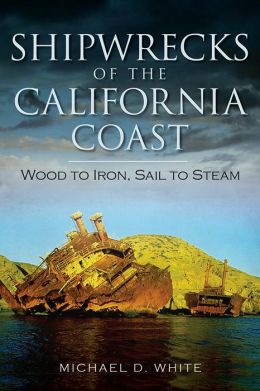
New in the Research Center: Shipwrecks of the California Coast
(by Heather Hernandez, Technical Services Librarian)
If you're interested in the history of California shipwrecks, then be sure to stop by the Research Center--Michael White's new book, Shipwrecks of the California Coast : wood to iron, sail to steam is now available.

Tuesday, February 18, 2014
Digging for Gold at the Library: Anthologies of Shipwrecks and Other Maritime Disasters
(by Gina Bardi, Reference Librarian)


As
the winter finally descends upon San Francisco my thoughts turn to good books
to cozy up with on a cold night (ok, East Coasters, be quiet. 50 degrees is
winter to us!)
Tucked
in a comfy chair with a blanket and a fire roaring, there are few better things
to read than tales of shipwrecks and disasters.
Safe in the knowledge that I will soon fall asleep in a warm bed, I can
let myself explore the terrible hardships encountered by those who brave the
sea and too soon learn of her cruelty.
I
went back to the shelves and picked 5 anthologies of shipwrecks and disasters
for those of you who are fascinated by the tragic side of the sea. 3 of them I
have read before and 2 are new to me. I hope you enjoy them safely and warmly
in the new year.
1. Kingston,
William Henry Giles. Shipwrecks and disasters at sea. New York: G.
Routledge, 1873. Book. (Available in the Library and online in multiple formats.)
Kingston’s
book is interesting because not only does it provide accounts of aforementioned
shipwrecks and disasters, but it also attempts to be an ethnography and a
natural history of places where the tales have happened. For instance, in the chapter entitled “The wreck
of the ‘Cabalva’ or the Adventures of Old Bo” there’s some very nice drawings
and descriptions of the canoes of New Guinea (p. 483) .
In
fact, this book has many charming illustrations. The one below caught my eye as
I was flipping through. Perhaps it’s the Oliver
like language. (p. 374)
Or
this one- the faces of the men are haunting (p. 209).
Or
this one of a bird colony- can’t you just these gulls a’sqwuakin’? (p. 283).
Most
of the accounts tend to be first person narratives. However, they are not cited
at all which would be frustrating if using this in any sort of academic way.
For example, the chapter on the foundering of the Arctic, begins, “Some years ago I made a passage, in the month of
September, on board one of the fine ships belonging to the Collins’ line of
steamers, from Liverpool to New York.” Whoever this “I” is is never mentioned
or addressed. It would be nice to know who our heroic survivor was.
2. Huntress,
Keith. Narratives of Shipwrecks and Disasters. Ames: Iowa State University, 1974. Book.
As
opposed to the Kingston book, this anthology strives to give background
information on both the narrator and the event.
Context greatly helps and gives an added dimension to the account. Huntress tells us, as an example, that the chapter
on the brig Polly so impressed Edgar
Allen Poe that he used it as a basis for his Narrative of Arthur Gordon Pym. Having read Pym a few years back, I knew I was in for a harrowing account. In fact, I would say this book really packs a
punch more so than some of the others. I believe the author has done a
particularly good job of selecting which narratives to use. The book has an added bonus of including a
“Checklist of narratives of shipwrecks and disasters” wherein Huntress lists
works in which “shipwrecks or other
maritime disasters have been the primary concern” (p. 218). There are a few hundred listed but he concedes
that there are thousands he has not listed.
3. Lockhart,
J.G. Peril of the sea: A book of shipwrecks and escapes. London: Philip Allan
& Co. 1924. Book.
This
collection differs from the previous two in that these are not solely first-hand
accounts or narratives; Lockhart tells the story and mixes in first-hand
accounts liberally. This collection is
interesting because it has a description of the sinking of the Titanic, something most of the
anthologies I’ve come across shy away from, most likely because it is
extensively covered in other sources.
There’s also an account of the sinking of the Birkenhead in 1852. Anyone want to venture a guess as to what the
wreck of the Birkenhead is famous for? (pause to give you a chance to think… no
Googling!) It’s the first known time the practice of saving the women and
children first was instituted. Despite
the fact that the frigate was well built and almost new there were not enough
lifeboats on board. Adding to the tragedy was that some of the
already inadequate number of boats were either destroyed in the wreck or
inaccessible because of it. Of the 445
on board, 193 were saved, around 30 of which were all the women and children on
board. A male survivor is quoted as
saying, “Thank God, it can seldom be said that Englishmen have left women and
children to perish and saved their own lives!” (Lockhart 267).
4. Martingale,
Hawser. Tales of the ocean and essays for the forecastle: containing matters and incidents humorous, pathetic, romantic and sentimental. Boston: B.B. Russell, 1874. Book. (The 1840 edition is available online and in the Library.)
Ok,
you caught me. This one isn’t just about
shipwrecks, but the title was so fetching to me I couldn’t resist pulling it
off the shelf and checking it out. I was anxious to see what all Mr. Martingale had collected for us
under the categories listed in the subtitle. Most of the contents of the book came from
articles published in the Boston Mercantile Journal presumably written by the
author. Martingale states in his
introduction “Among the Tales which are
here presented to the public, illustrative of life at sea, are interwoven
chapters of a different character; essays, which, prompted by a sincere wish to
promote the welfare of seamen, are designed to awaken in their bosom a sense of their moral duties” (p. iv) and later
claims:
if
a perusal of the following tales and essays will charm away a single wrinkle on
the anxious brow, or cause a single noble hearted Yankee mariner to reflect on
his moral nature, and to resolve to abandon the evil habits into which he may
have unconsciously fallen, their publication will not be in vain” (p. v).
Therefore,
many of the stories are very moral in nature.
Shipwrecks are due to drunken captains. Sailor’s downfalls are licentiousness women (indeed
he states, “Woman is a sunken rock in the sea of life, on which many a gallant
fellow has been wrecked” ) (p. 121) and woe to anyone who partakes of tobacco.
The
shipwrecks that are described are done so in ways that the delicate reader of
the 1800’s would not need to be reclined on a fainting couch to peruse
them. There is however a very nice
description of a Crossing the Line ceremony and some rollicking good yarns. The
title note on the catalog record says “Author claims most of stories and
anecdotes to be founded on fact” (p.iii).
I would think “founded” in this case means precariously perched on the
slimmest of threads.
5. Howe,
Henry. Life and death on the ocean: a
collection of extraordinary adventures in the form of personal narratives.
Cincinnati: Henry Howe. 1856. Book. (Available in the Library and online.)
This
wonderful collection has it all, descriptive accounts, varied and unusual
events and gripping illustrations. I’m a bit partial to Howe’s collection
because it contains an account of the French frigate Medusa I haven’t heard before.
The Medusa is one of my
favorite shipwrecks (it feels frivolous to deem a shipwreck a “favorite.” It’s
certainly one of the most fascinating and compelling. To get an idea of how
compelling, take a look at a painting of the raft done by Gericault in 1824. Most accounts
are taken from the survivors of the raft, but Howe’s contains a narrative from
one of the women, Mlle Picard, who was on one of the lifeboats.
He
also includes accounts that aren’t about shipwrecks per say, but rather
castaways and prisoners of war. The
account of the Old Jersey prison ship is particularly brutal. Here’s an
illustration (between p. 216 and 217):
Another
feature of this book is that it is more global in scope. Most of the other volumes mentioned here deal
with either British or American solely or a mixture of the two. Besides the aforementioned Medusa, he
includes a tale of a Russian vessel.
If
this blog post has been too much to handle- too much misfortune and despair, I
understand. Talking about shipwrecks and disasters can seem ghoulish, but for
many reading about these tragedies leads to better understanding of history and
an appreciation for the brave men and women who go to sea. But if any
sensibilities are too frayed, might I suggest visiting a website my co-worker
Amy sent to me… if this doesn’t rewarm your heart then you need an IV drip of
cocoa stat!
Tuesday, August 6, 2013
Digging for Gold at the Library: Jane Proctor letter, HDC 1043
(by Gina Bardi, Reference Librarian)


Most of what I write about for this blog are fun items-
little gems with interesting pictures or something just plain delightful I’ve
stumbled across. This though is about
something I found in our collection which was so sincere and heart wrenching
that even though it’s a departure from my usual pieces, I had to share it with
you.
The document is a letter in our archives, Historical
Document Collection 1043. It’s a letter
written by a woman named Jane Proctor who was a nurse at the Army Hospital at
the Presidio. It was written late in the
night of February 22nd, 1901. Ms. Proctor was unable to sleep due to
the deep and overwhelming grief she felt over the wreck the day before of The City of Rio de Janeiro. The City of Rio
de Janeiro was a Trans-Pacific steamship operating between San Francisco and
Asia. On the 21st of February 1901, she was headed into San
Francisco Bay when she hit a reef. She
sank quickly; her holds were completely flooded. 130 people died that night; many of the
bodies washing ashore the next day. Ms. Proctor describes this horrific scene
to unnamed friends back home in harrowing terms.
The full letter is below.
It has been transcribed from the original. The full collection includes a few more items
about Ms. Proctor including a diary entry.
A finding aid for the collection can be found here:


Citation:
Proctor, Jane.
Letter in regards to the City of Rio de Janeiro.Jane Proctor Collection.
HDC 1043.
Museum Archives and Manuscript Collections, San Francisco Maritime National
Historical Park.
Subscribe to:
Posts (Atom)