Showing posts with label books. Show all posts

Tuesday, March 24, 2015

Behind the scenes in Technical Services: fixing the Romance of Piracy

(by Heather Hernandez, Technical Services Librarian)

As any reader knows, despite our best intentions, books are occasionally damaged.  Here in the Collections Dept., we do a lot of repairs on our collections materials, including repairs and stabilization of items upon receipt--a lot of items are in bad shape when they arrive, and we repair and stabilize them so they can be used for research by our users.

The books shelved in our main stacks are not only used by researchers in the Reading Room of the Research Center, but unlike our rare books, they also circulate to staff, and to researchers at other libraries via interlibrary loan.  (Rare books never leave the Research Center, and the decision process for their preservation is entirely different--they are preserved as acquired and often placed in protective enclosures.)  Sometimes we decide to simply replace a damaged stacks copy by purchasing one in better condition, but when we can't easily replace the copy, or repair is more efficient than replacement, we repair it.

One such item is our copy of the Romance of Piracy--the bottom of its spine was damaged.  This typically happens when a book is dropped.  This is a picture of the spine at the bottom of the book, showing the spine slightly detached from the front board (the front cover).  The book is held spine up in a finishing press, ready for repair:


Using an adhesive that is a mixture of wheat starch and methyl cellulose in water, which is fully reversible in water (should we ever wish to reverse the repair), I used a small piece of hanji paper to repair the spine, placing part of the hanji paper under the rumpled and partially detached spine piece, and overlapping a bit onto the front cover:


Then a piece of wax paper is placed on the repair, with waste paper behind that to absorb moisture, and the book is wrapped in a bandage to apply pressure to the repair, so it dries as flat as possible.  It's left like this overnight (and I'm always impatient in the morning to see how it came out!)


This is the dried repair, with the book back in the finishing press, so I can easily trim the hanji paper's little threads that hang below the bottom of the book:


The final step is coloring the hanji paper so that it blends with the rest of the book binding with some colored pencils--this is purely for aesthetic reasons.  The finished repair:


And, most importantly, the book is now sound, and opens and closes again as it should, and is ready  to be read again!

Want to know more about preservation, conservation, and caring for collections?  CoOL, Conservation Online has lots of information and links, including Conservation/Preservation Information for the General Public.

Tuesday, December 9, 2014

Panama-Pacific International Exposition, 1915

(by Heather Hernandez, Technical Services Librarian)

To celebrate the 100th anniversary of the Panama-Pacific Exposition in 1915, we're digitizing and making freely available online some related items from our collections.  We're thankful for our intern Ellen Mizuhara's hard work on this project, ranging from researching relevant items and resources to the long hours spent scanning this scarce and fragile items.

Cliff House and Seal Rocks from Beach
From "Souvenir of San Francisco"

But wait--what does this have to do with maritime history?  A lot!  From images of the waterfront contained in publications to sponsored races, the Exposition was rich in maritime interactions.

Ocean Boulevard and Bathing Beach from Cliff House
From "Souvenir of San Francisco"
So we're proud to announce that with Ellen's assistance, our first offerings to celebrate the 100th anniversary of the Exposition:

Mechanical Engineering at the Panama-Pacific International Exposition by G.W. Dickie: read the online copy or locate the hardcopy book in the Research Center

New York to San Francisco Power Boat Race Under the Auspices of the Panama-Pacific Exposition:  read the online copy or locate the hardcopy book in the Research Center

Official Souvenir view book of the Panama-Pacific International Exposition at San Francisco 1915: read the online copy or locate the hardcopy book in the Research Center

Seeing San Francisco, California: read the online copy or locate the hardcopy book in the Research Center

Souvenir of San Francisco, California, the "Queen City:"  read the online copy or locate the hardcopy book in the Research Center

Want to learn more?  Search the Keys Catalog for materials related to the Exposition, check out an online map of the Exposition from the Virtual Museum of the City of San Francisco, explore online titles about the Exposition from Project Gutenberg, from the Internet Archive, and from Books About California, and stay tuned--we'll be digitizing more items related to the Exposition in 2015!

February 4, 2015 update:  New PPIE Centennial website from the California Historical Society.

Tuesday, December 2, 2014

Now available online: Cooking and Baking on Shipboard

(by Heather Hernandez, Technical Services Librarian)

Illustration of man in chef's hat ringing a dinner bell
Illustration from page 7

Have you ever wondered how to make cake for one hundred people?  Or have you wanted some simple, visual instructions for carving meat?  You can find all this and more in Cooking and Baking on Shipboard : Official War Administration Manual from 1945, which we've digitized and made available for free in multiple, searchable formats on the Internet Archive.

Over 358 pages, the book is richly illustrated with how-to photographs as well as clear drawings of everything from the basics to advanced techniques.  Definitions of cooking terms, advice on caring for equipment and for proper sanitation, and dozens of recipes and recommended menus are included.  We've made the book keyword searchable, but an extensive index at the end makes browsing easy.

So be sure to check it out online, or stop by the Research Center to see the hardcopy book.


Tuesday, October 21, 2014

Digging for Gold at the Library: Rime of the Ancient Mariner

(by Gina Bardi, Reference Librarian)

"With my cross-bow I shot the Albatross" illustration by Gustav Dore
"With my cross-bow I shot the Albatross" by Gustav Dore


If you’ve never read the poem, you can find it here from the Poetry Foundation, full text: The Rime of the Ancient Mariner 


Rime of the Ancient Mariner Pathfinder

This document was created to assist people who are interested in learning more about the poem, Rime of the Ancient Mariner by Samuel Taylor Coleridge and related subjects.

At the San Francisco Maritime Research Center
Books

The Poem 
Sure, you’ve read Rime of the Ancient Mariner, but have you seen it illustrated?

Coleridge, Samuel Taylor. The Rime of the Ancient Mariner. Milano: Edizione d’Arte “Felix,” 1966. Print.
Renowned illustrator Gustave Dore did the drawings for this edition. It is, as to be expected with Dore, marvelous and, due to the subject matter, frightening. FF PR4479 R5

Coleridge, Samuel Taylor. The Rime of the Ancient Mariner. New York: Heritage Press, 1945. Print.
This beautiful edition is illustrated by Edward A. Wilson with notes and an introduction by John Livingston Lowes, a Harvard professor who specialized in Coleridge. The printing quality is outstanding and this volume is perfect for reading aloud.
FF PR4479 A1 1945
  
Poetry and Criticism in General
This is just a sampling of the material we have on poetry collections and literary criticism. Please visit our online catalog: www.keys.bywatersolutions.com  to see more selections.

Boon, Kevin A., and Karen Markoe, eds. Reading the Sea: New Essays on Sea Literature. 1st ed. New York: Fort Schuyler Press, 1999. Print.
Fort Schuler Press is the academic press of the State University of New York Maritime College. One of the essays in this book is entitled: Blurred binaries: a mapping of excess and desire in S.T. Coleridge's "Rime of the ancient mariner"  by Royce W. Smith.
PN56 S4 R43 1999

Cole, William. The Sea, Ships and Sailors; Poems, Songs and Shanties. New York: Viking Press, 1967. Print.
Besides the “regulars” this collection includes works by people as diverse as Shel Silvertstein and John Updike.
PN6110 S4 C62 1967

Kobus, L. C. S. The Rhyme of the Modern Offshoreman. Houston: Seamount Book Co, 1975. Print.
I added this because it’s such an unusual book of poetry on such a specific topic. Titles included are “The Old Sea Rig’ and “The Offshore Platform.”
PN6110 S4 K4 1975

Williamson, W. M. The Eternal Sea, an Anthology of Sea Poetry. New York: Coward-McCann Inc, 1946. Print.
This compact volume includes over 100 poems. They are arranged by topics, such as “Nautica Mystica” and “A Child of the Sea”.
PN6110 S4 W6

Superstitions and Folk Lore
Bassett, Fletcher S. Sea Phantoms, Or, Legends and Superstitions of the Sea and of Sailors in All Lands and at All Times. Rev. ed. Chicago: Morrill, Higgins & Co, 1892. Print.
Also available full text on line here.
This book is cram packed with useful tidbits. If you ever come face to face with a kraken, you’re going to wish you had read this.
GR910 B31 1892
  
Beck, Horace Palmer, and Marine Historical Association. Folklore and the Sea. 1st paperback ed. Middletown, Conn: Published for the Marine Historical Association, Mystic Seaport, by Wesleyan University Press, 1977. Print.
Horace Beck is a notable Folklorist. A professor at Middlebury College in Vermont for over 20 years, this book is considered a classic in both folklore and maritime studies.  
GR910 B37

Clary, James. Superstitions of the Sea. St. Clair, Michigan: Maritime History in Art, 1994. Print.
This book Is an easy to read compendium of superstitions and stories from around the world.
GR910 C53 1994

Archival Material
We have many collections which include original poetry written by seamen. For an overview, please see this post on our blog, Full Fathom Five.  

Photographs
We have photosgraphs in the collection depciting sailors and albatross. Be on the lookout for an upcoming blog post of Full Fathom Five highlighting these and other images in our collection remeniscent of The Rime

Online
The Rime of the Ancient Mariner  from the Poetry Foundation
The Rime of the Ancient Mariner from Project Gutenberg
See the beautiful Gustave Dore illustrations  for the Rime in the University of Buffalo’s digital collections.
Smith, Laura Alexandrine. The Music of the Waters: A Collection of the Sailors' Chanties, Or Working Songs of the Sea, of All Maritime Nations. Boatmen's Fishermen's, And Rowing Songs, And Water Legends. London: K. Paul, Trench, 1888.
The University of Ottawa in Canada has gathered a useful list of literary criticism of the poem.

At Other Institutions
Here are some sources outside of the library which might be useful.
Books

Bloom, Harold. Samuel Taylor Coleridge's the Rime of the Ancient Mariner. New York: Chelsea House Publishers, 1986. Print.
This essay collection edited by noted critic Harold Bloom is part of the Modern Critical Interpretations series and even includes an essay by Camile Paglia.

Boulger, James D. Twentieth Century Interpretations of the Rime of the Ancient Mariner: A Collection of Critical Essays. Englewood Cliffs, N.J: Prentice-Hall, 1969. Print.
Includes essays by Coleridge scholar John Livingston Lowes and the poet Robert Penn Warren.
Coleridge, Samuel T, Martin Gardner, and Gustave Doré. The Annotated Ancient Mariner: The Rime of the Ancient Mariner. New York: C.N. Potter, 1965. Print.
This edition combines the drawings of Dore with the elucidation of scholar Martin Gardner.

Film
Rime of the Ancient Mariner. Dir. daSilva R. perf. Michael Redgrave. . West Long Branch, N.J: Kultur, 1984. Film.
The worldcat.org summary states: “A two-part program which examines the life of Samuel Coleridge from his orphaned childhood to how his friendship with William and Dorothy Wordsworth inspired him to write the rime of the ancient mariner. Part 2 consists of a visualization of Coleridge's epic poem - The rime of the ancient mariner.”

The Rime of the Ancient Mariner. Dir. Jordan, Larry. Perf. Orson Welles.  Chicago, Ill: Facets Video, 1989. Film.
The worldcat.org summary states: “Using the classic engravings of Gustave Doré and a cut-out style of animation, the film follows Samuel Taylor Coleridge's long dream of an old mariner who kills an albatross and suffers the pains of the damned for it.”

Music
Iron Maiden. Rime of the Ancient Mariner. 1985. CD.                  
I couldn’t resist throwing this on here. The 13 minute long song stays faithful to the poem, even including passages that lead singer Bruce Dickinson eerily recites. Could Eddie be the Ancient Mariner?


Tuesday, October 7, 2014

New in the Research Center: Rough Weather All Day

(by Heather Hernandez, Technical Services Librarian)

Cover of Rough Weather All Day, edited by David Hirzel
We're delighted to announce that Rough Weather All Day : an Account of the "Jeannette" Search Expedition by Patrick Cahill, edited by David Hirzel, is now available in the Research Center.

Patrick Cahill, a member of the expedition, kept a diary that has been unavailable in published form until now.  Rich in details of the daily life spent among native peoples that sheltered the members of the expedition, this title is of interest to anyone wanting to learn more about the exploration of the northwest coast of North America.

Tuesday, September 23, 2014

Tuesday, September 9, 2014

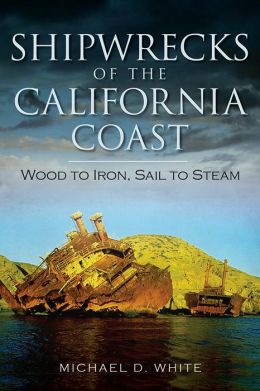
New in the Research Center: Shipwrecks of the California Coast

(by Heather Hernandez, Technical Services Librarian)

Cover
If you're interested in the history of California shipwrecks, then be sure to stop by the Research Center--Michael White's new book, Shipwrecks of the California Coast : wood to iron, sail to steam is now available.

Tuesday, September 2, 2014

New in the Research Center: The Abalone King of Monterey

(by Heather Hernandez, Technical Services Librarian)

Cover

Do you know the story of "Pop" Ernest Doelter, pioneering Japanese fisherman?  Interested in abalone recipes?  Then stop by the Research Center and take a look at our newly available book, The Abalone King of Monterey.

Tuesday, August 26, 2014

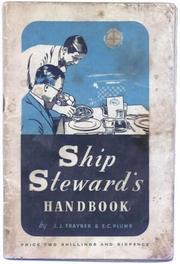
New in the Research Center: Ship steward's handbook

(by Heather Hernandez, Technical Services Librarian)

Cover

The back cover of the Ship Steward's Handbook says it all:  "This charming little handbook was first published in the 1950s as an aid for stewards in the Merchant Navy. With an emphasis on pride in one's work, and a thoroughness and dedication to the highest level of service, it sets out precise instructions on a steward's duties from table etiquette to cabin service."  Illuminating not just the steward's duties, but what it may have been like to be under such a steward's care, be sure to stop by the Research Center to take a look at this glimpse into a mid-century merchant sailor's seafaring life.

Tuesday, August 5, 2014

Maritime Metaphors: We're near the water

(by Heather Hernandez, Technical Services Librarian)

One of my favorite songs by one of my favorite bands is "Nothing on My Mind" by Too Much Joy.  (Give it a listen on their Song of the Week blog.)  It's a song on their album Cereal Killers, which is always with me--in multiple formats at home, and on my player in my bag.

This song has always captured an exact feeling for me:  grabbing a sketchbook and heading to the water.  In times of joy, in times of sadness--letting it all go, sitting on the beach, on a pier, or on a boat and losing myself in drawing what I see.  A sketchbook, drawings, pencils, colors--and the water with its boats, birds, waves.  One of the best things about where I work, and where anyone can visit:  we know "guys" with boats, and some of them are so quiet...without motors...

What does this have to do with Collections?  Plenty!  Need some hints about drawing?  Need something to color?  These will get you started:


Then head to the water.  Sit and enjoy the sound of the waves.  Float around on a boat.  Start drawing and coloring, and drift...let there be nothing on your mind...

Nothing On My Mind

It’s not important
This stuff that I’m afraid of
I’ve got a bugle someplace
Let’s get a parade up
We’re near the water
I know a guy with a boat
It doesn’t have any motor
We can just sit and float

I’ll give you a coloring book
You can draw outside the lines
I’ve got nothing on my mind

My cousin died at a Who concert
He was camping out in line
Me and him went camping, once
I’ve got nothing on my mind
That’s my favorite song
Baby do you wanna dance
If you’re happy and you know it
You got to clap your hands

I’m out of control
Je t’aime le rock and roll

Tuesday, July 15, 2014

Digging for gold at the library: Magic Portholes!

(by Gina Bardi, Reference Librarian)

I dropped my pencil in the stacks the other day.  As I bent down to pick it up, I noticed a title that struck my fancy--Magic Portholes.  Magic Portholes!  I’ve been here three and a half years so it’s inexcusable that a book with the title Magic Portholes would escape my attention until now.  All I can say is that it was on a bottom shelf and studies have shown that people are less likely to look on lower or higher shelves than middle ones.  No excuses, though.  Let’s just jump right in, shall we?

This brightly green colored book with a delightful font is by Helen Thomas Follett, a travel writer and essayist.  The first thing that caught my eye as I flipped through it was the wonderful drawings by Armstrong Sperry.  Some of you die hard book lovers might know him from his Newberry Award winning book, Call it Courage, about a Polynesian youth overcoming his fear of the sea.  In Magic Portholes, his woodcut style illustrations are enchanting.  Here are two fine examples of his work:


I was hooked. I turned to read the opening sentence, as any book lover will tell you the measure of most books can be gathered from the opening sentences.  “Magic Portholes” begins thusly:
“Let’s go to sea for a year!”
“Where?  For a what? Come on, Barbara, dry the dishes for me will you?”
“Come on mother, let’s run away to sea”
That’s what I call an intriguing start.  A daughter pleading with her mother to run away to sea with her?  How I wish I would have found this for Mother’s Day! It’s rare to find a sea adventure story that is about women, much less between a mother and daughter. I immediately wanted to know more about this book, so I started researching.  Within a few minutes I had learned an intriguing and terribly sad story, not about this book but about the lives of the women who lived it.

So first, let’s discuss this book on its own merits before getting into the strange facts which surround it. Magic Portholes  is  a true story, or at least based on true events.  The author and her daughter Barbara (much more on her later) did in fact run away to sea. The story starts out in New England with daughter Barbara urging a sea journey. She lays out persuasive arguments:
I want to live at sea much longer than ten days [ed. note: see below]. Oh I’ll take along books and study. Think of reading Virgil up in the crosstrees, or straddling the main book or lying in the fold of a furled spanker in some quiet harbor (p. 2).
 “Let me tell you,” Barbara began, “Just what it’ll be like, that first day at sea. We’ll be towed out, and the tug captain and the master of our sailing ship will call across to each other, in their hoarse voices. We’ll be standing on the poop and you’ll get your first thrill when the little donkey engines start up. But wait until you hear the sounds of the rippling sails in the masts! You’ll hear the skipper call out, ‘Mains’l out first, then fores’l, forestays’l, and jibs; spanker and tops’ls. Lively, boys! We’ll be safely outside and prancing down the harbor under sail, and then we’ll cast the towrope, and the little tug will wheel about and chug back to the city. But we’ll be free! The great white sails will lift and lift and fill and fill, and we’ll be off. Off…” (p. 6).
The two wind up in the West Indies and then onto Tahiti, Fiji, Samoa and points in between.   Magic Portholes is their discovery of those beautiful islands and the adventures they have. It’s not so much of a travelogue as a lively conversation. The two never seem to get down and always face any setbacks with bemusement.  They mostly travel by schooner, their preferred method, with occasional tramp steamers thrown in. Along the way they try to live for six shillings a day or less. They pick up work here and there writing dispatches or doing odd jobs.  Mostly, people seem to be drawn to them and their vivacious way of living.  I should note that there is some inappropriate language in the book that is unfortunately a product of the times the book was published in (1932). It seems out of place with the easy going good cheer of the novel and is a blight on an otherwise charming work.

The real life of Helen and Barbara Follett was short of good cheer.  Wilson Follett, Helen’s husband, left the family for another woman when Barbara was 13.  The blow was shocking both emotionally and financially. Helen and Barbara were left reeling. It most likely was her adventuress daughter’s idea to run away to sea, ostensibly to get material to write books because Barbara, it should be noted, was already an accomplished author. At 11 she had published a book, The House Without Windows which was extremely well received and made something of a celebrity out of its young author.  Lee Wilson Dodd reviewed it in The Saturday Review of Literature said of it, “This is very beautiful writing. But there are moments when, for one reader, this book grows almost unbearably beautiful. It becomes an ache in the throat. Weary middle-age and the clear delicacy of a dawn-Utopia, beckoning…the contrast sharpens to pain.”   Barbara went on to publish one more book, The Voyage of the Norman D. which was about the time she spent, as a 13 year old on a schooner, the Norman D. Yes, you read that right. At 13 she had decided to go to sea by herself and got her parents to book her passage on a schooner where she basically a passenger with chores (which explains the line in the passage above where she wants to live at sea more than 10 days).  Shortly after she returned, her father deserted the family.  Losing both a father and supporter, Barbara was left reeling.  It was then she and her mother decided to go to sea and gathered the material which would become Magic Portholes. Upon returning, Helen and Barbara struggled back in the states, finding it very difficult to earn a living. Barbara moved to LA, hated it, and moved back to New York.  She didn’t publish anything else, although according to an article in Lapham’s Quarterly by Paul Collins, she completed two manuscripts, one called Lost Island and another Travels Without a Donkey but neither was published.  She married very young, still a teenager.  Her marriage was unhappy and she was plagued with worry that her husband was not faithful. In 1939, at age 25, she walked out of her apartment after a fight with her husband. She was never seen again.  The Collins story is wonderful and if you are intrigued by the little I have covered here, I suggest it for further reading.

But back to Magic Portholes, so as not to end in sadness but rather excite you to take your own adventure (Perhaps with your mom? Call her!) this is another excerpt from the book:
That night, our first at sea, we lay awake in our bunks a long time, listening to the ocean outside our portholes. Fragments of talk floated around the little cabin, up from one bunk and down from another. 
‘Hear that voice outside? That’s the voice that’s been haunting me for a year.  Feel that wind? No breeze on land so fresh as that. Look through the porthole! See the dome sand callous ocean rising falling- stars riding the waves… I’m at sea again.  Am I? It smells like it; it looks like it; it sounds like it. To-morrow we’ll be at sea- the next day -the next- and we’ll sleep to-night with the sound of the ocean in our ears, of wind in the sails- no, you know what I mean- the sound of engines- throbbing sound, not like sails, though.  But it doesn’t matter- not much… Good night’ (p. 31).

So, all of you library browsers out there take note- drop a pencil once and awhile and see what you find. If you’d like to see this book or anything else in our research center, just drop me a line.

Sources:
Dodd. lee Wilson. “In Arcady.” Saturday Review of Literature (1927). Web. 28 May 2014.
Collins, Paul. “Vanishing Act.” Lapham’s Quarterly. 18 Dec. 2010. Web. 28 May 2014.
Follett, Helen. Magic Portholes. New York: The Junior Literary Guild, 1932. Book.

Tuesday, May 6, 2014

New in the Library: Color your 1946 world

(by Heather Hernandez, Technical Services Librarian)

Now available in the Library, Pittsburgh Marine Finishes is a full color catalog of the marine paints and coatings that were available from the Pittsburgh Plate Glass Company in 1946.  Sleek vessels illustrate the front and back covers:

Front cover

Back cover

And inside you'll find full color illustrations of the possible applications for many types of vessels, large and small, showing vessel exteriors as well as interiors:


And, of course, no catalog would be complete without the swatches.  The catalog contains page after page of samples of colors and finishes such as this one:


For the vessel or the home, this volume is a wealth of inspiration for anyone seeking color inspiration--especially mid-20th century color inspiration!


Monday, April 14, 2014

New in the Library: Ships' altars

(by Heather Hernandez, Technical Services Librarian)

Cover of the Library's copy
A very rare pamphlet on Ships' altars and church spaces on Hamburg-American & North German Lloyd ships is now available in the Library.  Chiefly illustrations of the ships' worship spaces, this small volume of twelve pages published in 1935 also outlines the services available to passengers and crew:


To see more, just contact us!

Tuesday, February 18, 2014

Digging for Gold at the Library: Anthologies of Shipwrecks and Other Maritime Disasters

(by Gina Bardi, Reference Librarian)

As the winter finally descends upon San Francisco my thoughts turn to good books to cozy up with on a cold night (ok, East Coasters, be quiet. 50 degrees is winter to us!)

Tucked in a comfy chair with a blanket and a fire roaring, there are few better things to read than tales of shipwrecks and disasters.  Safe in the knowledge that I will soon fall asleep in a warm bed, I can let myself explore the terrible hardships encountered by those who brave the sea and too soon learn of her cruelty.
I went back to the shelves and picked 5 anthologies of shipwrecks and disasters for those of you who are fascinated by the tragic side of the sea. 3 of them I have read before and 2 are new to me. I hope you enjoy them safely and warmly in the new year.

1. Kingston, William Henry Giles. Shipwrecks and disasters at sea. New York: G. Routledge, 1873. Book. (Available in the Library and online in multiple formats.)

Kingston’s book is interesting because not only does it provide accounts of aforementioned shipwrecks and disasters, but it also attempts to be an ethnography and a natural history of places where the tales have happened.  For instance, in the chapter entitled “The wreck of the ‘Cabalva’ or the Adventures of Old Bo” there’s some very nice drawings and descriptions of the canoes of New Guinea (p. 483) .


In fact, this book has many charming illustrations. The one below caught my eye as I was flipping through. Perhaps it’s the Oliver like language.  (p. 374)


Or this one- the faces of the men are haunting  (p. 209).


Or this one of a bird colony- can’t you just these gulls a’sqwuakin’? (p. 283).


Most of the accounts tend to be first person narratives. However, they are not cited at all which would be frustrating if using this in any sort of academic way. For example, the chapter on the foundering of the Arctic, begins, “Some years ago I made a passage, in the month of September, on board one of the fine ships belonging to the Collins’ line of steamers, from Liverpool to New York.” Whoever this “I” is is never mentioned or addressed. It would be nice to know who our heroic survivor was.

2. Huntress, Keith. Narratives of Shipwrecks and Disasters. Ames: Iowa State University, 1974. Book.

As opposed to the Kingston book, this anthology strives to give background information on both the narrator and the event.  Context greatly helps and gives an added dimension to the account.  Huntress tells us, as an example, that the chapter on the brig Polly so impressed Edgar Allen Poe that he used it as a basis for his Narrative of Arthur Gordon Pym.  Having read Pym a few years back, I knew I was in for a harrowing account.  In fact, I would say this book really packs a punch more so than some of the others. I believe the author has done a particularly good job of selecting which narratives to use.  The book has an added bonus of including a “Checklist of narratives of shipwrecks and disasters” wherein Huntress lists works  in which “shipwrecks or other maritime disasters have been the primary concern” (p. 218).  There are a few hundred listed but he concedes that there are thousands he has not listed.

3. Lockhart, J.G. Peril of the sea: A book of shipwrecks and escapes. London: Philip Allan & Co. 1924. Book.

This collection differs from the previous two in that these are not solely first-hand accounts or narratives; Lockhart tells the story and mixes in first-hand accounts liberally.  This collection is interesting because it has a description of the sinking of the Titanic, something most of the anthologies I’ve come across shy away from, most likely because it is extensively covered in other sources.  There’s also an account of the sinking of the Birkenhead in 1852.  Anyone want to venture a guess as to what the wreck of the Birkenhead is famous for? (pause to give you a chance to think… no Googling!) It’s the first known time the practice of saving the women and children first was instituted.  Despite the fact that the frigate was well built and almost new there were not enough lifeboats on board.   Adding to the tragedy was that some of the already inadequate number of boats were either destroyed in the wreck or inaccessible because of it.  Of the 445 on board, 193 were saved, around 30 of which were all the women and children on board.  A male survivor is quoted as saying, “Thank God, it can seldom be said that Englishmen have left women and children to perish and saved their own lives!” (Lockhart 267).

4. Martingale, Hawser. Tales of the ocean and essays for the forecastle: containing matters and incidents humorous, pathetic, romantic and sentimental. Boston: B.B. Russell, 1874. Book.  (The 1840 edition is available online and in the Library.)

Ok, you caught me.  This one isn’t just about shipwrecks, but the title was so fetching to me I couldn’t resist pulling it off the shelf and checking it out. I was anxious to see  what all Mr. Martingale had collected for us under the categories listed in the subtitle.  Most of the contents of the book came from articles published in the Boston Mercantile Journal presumably written by the author.  Martingale states in his introduction  “Among the Tales which are here presented to the public, illustrative of life at sea, are interwoven chapters of a different character; essays, which, prompted by a sincere wish to promote the welfare of seamen, are designed to awaken in their bosom  a sense of their moral duties” (p. iv) and later claims: 

if a perusal of the following tales and essays will charm away a single wrinkle on the anxious brow, or cause a single noble hearted Yankee mariner to reflect on his moral nature, and to resolve to abandon the evil habits into which he may have unconsciously fallen, their publication will not be in vain” (p. v).

Therefore, many of the stories are very moral in nature.  Shipwrecks are due to drunken captains.  Sailor’s downfalls are licentiousness women (indeed he states, “Woman is a sunken rock in the sea of life, on which many a gallant fellow has been wrecked” ) (p. 121) and woe to anyone who partakes of tobacco.
The shipwrecks that are described are done so in ways that the delicate reader of the 1800’s would not need to be reclined on a fainting couch to peruse them.  There is however a very nice description of a Crossing the Line ceremony and some rollicking good yarns. The title note on the catalog record says “Author claims most of stories and anecdotes to be founded on fact” (p.iii).  I would think “founded” in this case means precariously perched on the slimmest of threads.

5. Howe, Henry. Life and death on the ocean: a collection of extraordinary adventures in the form of personal narratives. Cincinnati: Henry Howe. 1856. Book.  (Available in the Library and online.)

This wonderful collection has it all, descriptive accounts, varied and unusual events and gripping illustrations. I’m a bit partial to Howe’s collection because it contains an account of the French frigate Medusa I haven’t heard before.  The Medusa is one of my favorite shipwrecks (it feels frivolous to deem a shipwreck a “favorite.” It’s certainly one of the most fascinating and compelling. To get an idea of how compelling, take a look at a painting of the raft done by Gericault in 1824.  Most accounts are taken from the survivors of the raft, but Howe’s contains a narrative from one of the women, Mlle Picard, who was on one of the lifeboats.
He also includes accounts that aren’t about shipwrecks per say, but rather castaways and prisoners of war.  The account of the Old Jersey prison ship is particularly brutal. Here’s an illustration (between p. 216 and 217): 


Another feature of this book is that it is more global in scope.  Most of the other volumes mentioned here deal with either British or American solely or a mixture of the two.  Besides the aforementioned Medusa, he includes a tale of a Russian vessel.

If this blog post has been too much to handle- too much misfortune and despair, I understand. Talking about shipwrecks and disasters can seem ghoulish, but for many reading about these tragedies leads to better understanding of history and an appreciation for the brave men and women who go to sea. But if any sensibilities are too frayed, might I suggest visiting a website my co-worker Amy sent to me… if this doesn’t rewarm your heart then you need an IV drip of cocoa stat!


Thursday, January 2, 2014

Digging for Gold at the Library: California life

(by Gina Bardi, Reference Librarian)


Frontispiece, "Entrance to the Golden Gate"


We have a fabulous collection of first hand voyage accounts.  We have shelves and shelves of memoirs written by all manner of people from old salt captains to sea sick passengers. Most of these describe voyages across seas and taper off once land is reached. But maritime activities extend to the shore as well. For every ship that sails and touches land, the story of those passengers and crew continues. San Francisco was a port city and its shores reached far inland. In that vein, One of my new favorite gems isn’t written by a sailor or a passenger (although he was a passenger at times) rather a minister who came to San Francisco in September of 1849, a man by the name of William Taylor.

Taylor writes eloquently of the San Francisco waterfront and all the human drama that took place there. He speaks with newly arrived captains to hear news of their voyages and he describes witnessing the suffering of shipwreck victims. He also visits hospitals, shanties and mining camps and recounts his adventures in weighty paragraphs full of flourishes. Indeed he has a flair for the dramatic, but what I find charming are the small details.  He reveals the colorful minutia of a world long forgotten.

For instance, here’s a passage describing the arrival of a steamer carrying mail and passenger:
When the signal flag on telegraph hill, announcing the arrival of a steamer, was thrown to the breeze, there was a general rush, and before the arrival gun was fired the wharf was crowded…to the number sometimes of three to five thousand…
The fact is, that men by the hundreds assembled through social sympathy to witness the happy greeting of men and their wives who had not seen each other for years, accompanied by dancing and shouting for joy, embracing, kissing, laughing, and crying…the disappointment of those whose wives did not arrive at the time expected was almost like a thunder shock… Another friend of mine had his family coming out in that splendid clipper ship, the “Queen of the Seas.” When she was due, I was told he prepared a great feast and invited two hundred guests to celebrate the occasion of his wife’s arrival. When he boarded the ship his little daughter met him, and pointed to a box which lay in a boat on the hurricane deck, securely folded in tarpaulin, and said to him, “There’s mother!” She had been a corpse for three months. (215-216)

Of course not all of the stories are as sad as that one.  Here’s a humorous one describing the fare paid on riverboats carrying passengers to Sacramento,
The fare alone from San Francisco to Sacramento City was thirty dollars [That’s approximately 800 bucks today!]  … Captain Gleason, as one of the owners of the steamer M’Kim, that plied between the two cities named, offered a free passage to all regular ministers…at any rate it became a custom with the owners and agents of steamboats running on the Sacramento and San Joaquin River to give all regular ministers a free ticket…They subsequently thought that the privilege was abused; that preachers multiplied too fast for the wants of the country; in other words, that many who were not pastors…took advantage of it. It was said for example that a man took passage on a Sacramento boat for himself and a lot of mules.  When the Captain demanded his fare, he replied, “O, I’m a preacher, sir.” “Indeed!” said the captain, and pointing to the mules inquired, “and are these preachers, too?”  The fellow had to “walk up to the captain’s office and settle.” (114-115)
Some are neither sad nor humorous but rather phobia inducing (Warning- for anyone who has a fear of rats, I beg you to skip the next part). He writes of the rats which permeated every part of the streets and wharves saying, “I have seen them swimming in the bay, from ship to ship, and when pursued they would dive and swim under water like minks” (47). We often speak of the “forests of masts” in the bay during the Gold Rush, but sounds more like a forest of rats to me.

There are many more personal observations and anecdotes throughout the book. It’s well worth a look. What’s that? Can’t get into the library to see this? Well, libraries have thoughtfully digitized versions for you, full text searchable.  Enjoy!  Oh and back up in paragraph 1, I mentioned the many first hand voyage accounts we have.  Here’s a brief list curated by Ted Miles.

Taylor, William. California Life Illustrated. New York: Carlton & Porter, 1858. Book.  

Monday, December 2, 2013

Now online: Gilman & Co.'s list of whaling ships

(by Heather Hernandez, Technical Services Librarian)

The Library is continuing its pilot program to digitize and make available online items of various lengths, materials, and contents in the Library collection.  The latest item digitized, and now available online, is a fragile folded sheet published in Hawaii in 1854, Gilman & Co., ship chandlers and general agents, Lahaina, Maui, S.I. : ships supplied with recruits, storage, and money.

Chiefly columns of data about whaling ships, the columns include arrival date, ship name, master, from, months out, whole voyage, on board, this season, and remarks.  Printed on one folded sheet of thin blue paper, the entire item is now available online in color as images available in the Keys Catalog (just click on the "Images" tab of the Keys Catalog record to see them), and in multiple formats via the Internet Archive and NPS Focus.

Want to see the hard copy?  Just stop by the Library and ask to page this item.